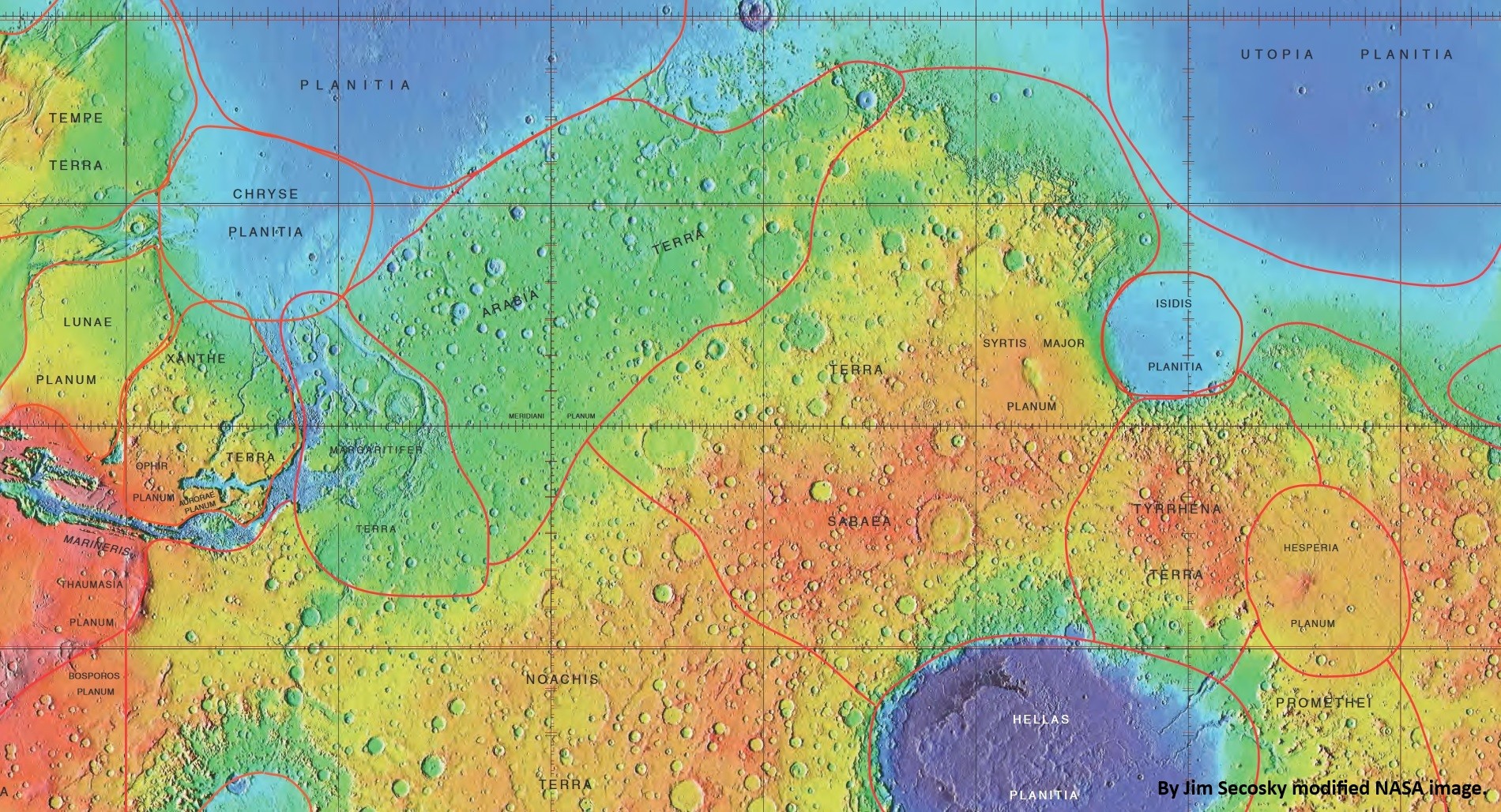
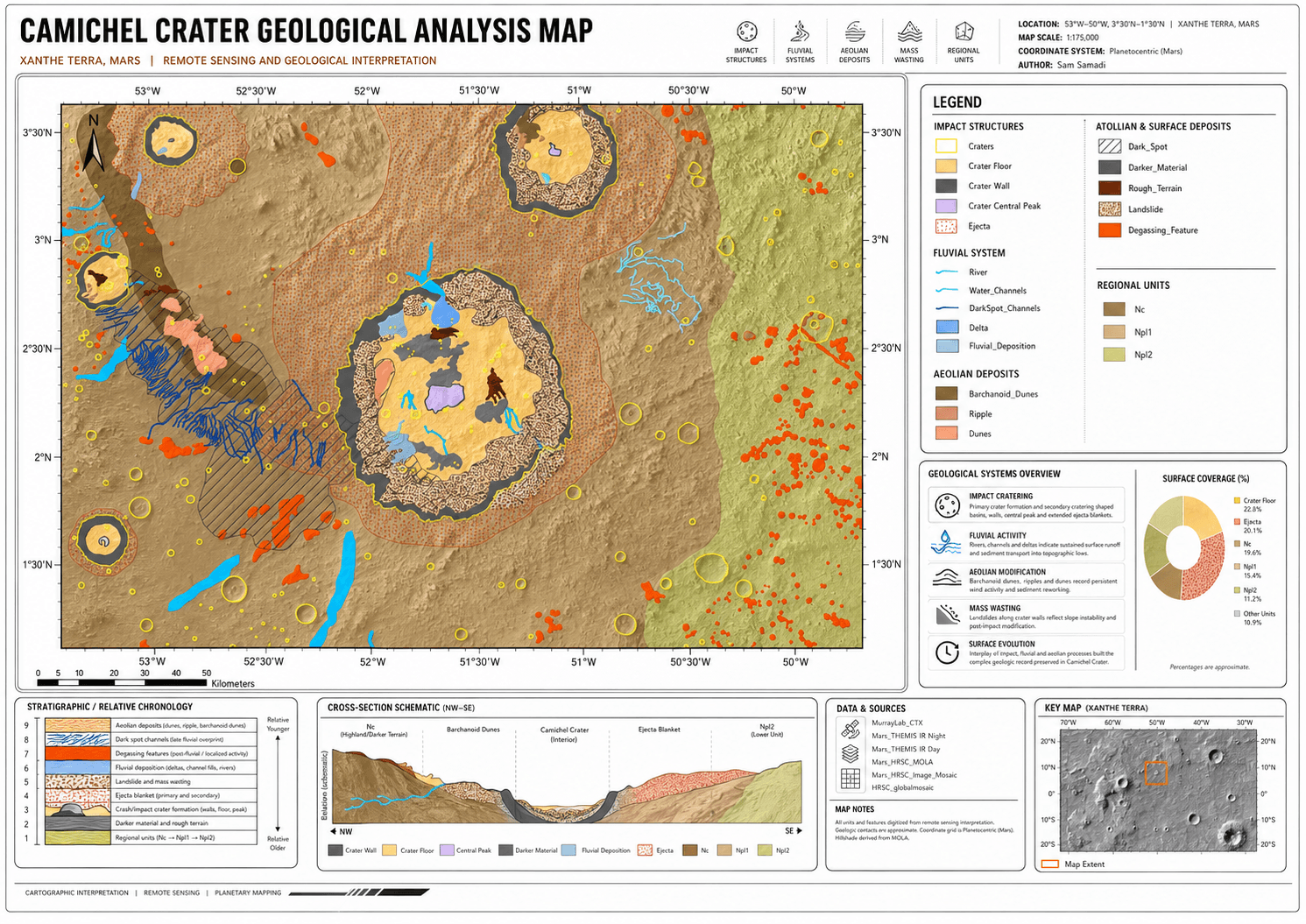
This project presents a geological and remote sensing interpretation of Camichel Crater in Xanthe Terra, Mars. Using CTX imagery, THEMIS infrared day and night data, HRSC-MOLA topography, and HRSC mosaic layers, the study maps the crater’s major surface units and geomorphic features, including impact craters, ejecta blankets, crater walls and floors, fluvial channels, delta deposits, dunes, ripples, landslides, darker surface materials, and regional Noachian units. The mapping process combined high-resolution image analysis, topographic interpretation, manual digitization, automated crater extraction in ArcGIS Pro, and relative age dating through crater counting and stratigraphic relationships. The final interpretation reconstructs a complex geological evolution: early impact cratering, later fluvial activity linked to a wetter Martian environment, and a final transition toward dry, wind-dominated surface modification.